Saturday, 6 December 2014

Suspense is everything...


        Dictionary definition - suspense is "a state of uncertainty".
I think I enjoy plotting and writing thrillers because  they are the kind of stories I love to read myself. A good story that grips me from beginning to end with the ‘will he /won’t he' succeed motif is the best kind of tale. And the feeling that disaster is around every corner doesn't hurt either. This to me is the art of suspense. Keeping readers on the proverbial edges of their comfy sofa is what I always aim for. I know this type of book is not to everyone’s  taste but for me it is the bedrock of good story telling.
One of the all time greatest proponent of the art of suspense was Alfred Hitchcock and I seem to recall reading somewhere that he said one of the greatest ways to create really good suspense was to put a bomb under a table (metaphorically speaking) where people, unbeknowingly, are playing a dull game of cards. The audience, of course, would know the bomb was there and ticking but the cast of players would not. What unbearable suspense for the audience!
The Witcheye Gene
Suspense in thrillers, in my humble opinion, is the key to success. Rising tension with lots of problems and, most importantly, loads of conflict for the main character is what keeps readers involved and in a state of uncertainty.
I like to think my own thriller books - especially The Witcheye Gene is full of suspense. I did craft it as a page turning, thriller read that is fast paced and full of twists and turns.
I believe suspense (and some say suspense of some kind is essential in any good novel - be it romance, action, scifi or whatever) is what keeps the reader reading!
A bomb under the table doesn’t hurt either!


Do you try to put suspense in your stories?

Thursday, 4 December 2014

From Backyard to Graveyard.


From backyard to graveyard

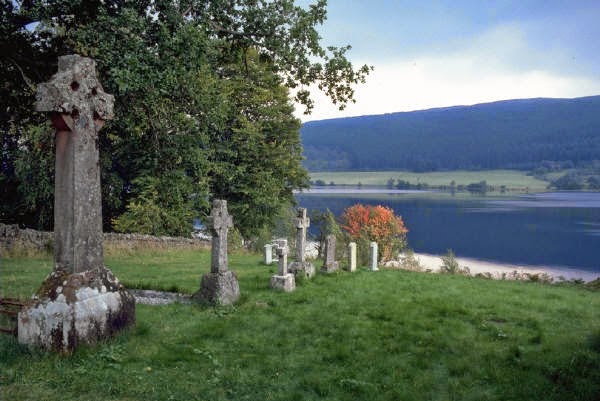
The subject of graveyards or cemeteries is something that fascinates me. As a writer of supernatural thriller novels the sombre oppressive atmosphere of a graveyard, imbued with such reverence and awe as befits the dead, is a great place to start. Its melancholy sense of past misery seems to hang in the air like some unholy miasma as legions of the living have cried rivers of tears in their intense grief and loneliness. What a sad place for the living…

Death is inevitable for all of us and in a graveyard we are reminded of the frailty of human existence like nowhere else. The fascination for me, when I visit graveyards, is to look at the oldest graves and inscriptions and wonder what happened to the person… Sometimes great ideas for stories spring forward from this as I try to imagine what life might have been like for the said dead person.

But apart from that there is the great unknowing… What does happen when we finally confront our very existence? Scary stuff, indeed, for most of us… Unless you have great faith in your own brand of religion/belief… Most of us do not want to be reminded that we are going to pass into the great unknown someday. Perhaps that is really the scary part about graveyards and cemeteries.

But spirits, ghosts and things that go thump in the night are also great things to think about in graveyards…

So let your imagination fly!! If you dare…

Do graveyards/cemetaries scare you or are they just places of great sadness?

Monday, 1 December 2014

Still Free, free , free...

"The Witcheye Gene" is still FREE for a couple more days only. Get your free copy now.

Available on  Amazon:

Amazon.co.uk The Witcheye Gene

Also Amazon.com The Witcheye Gene


Any comments or reviews would be greatly appreciated.

Have you offered your books for free? Do you think it a good idea or not?

Sunday, 30 November 2014

FREE BOOKS!

FREE! Free free...

For a few days only my thriller novel "The Witcheye Gene" is totally free on amazon. Get your free copy now!"The Witcheye Gene"
Stuffed cats, auras, second sight, different coloured eyes and evil personified all feature in this tense thriller.

We all have auras.
Kendal MacIntyre has fought long and hard to overcome the emotional scars of an unhappy childhood to create the successful boutique business she now has. Having lost her husband to cancer she is driven by one thing only – to see her daughter April have all the advantages in life that she herself was denied. So when someone appears to be snooping, she is terrified that her shameful secret will wreck April’s chances in life and she stubbornly refuses to acknowledge the hereditary trait of ‘special’ sight. But when an evil killer threatens the very existence of her family, she knows she must face her demons if she is to save the one thing she cares about.


The eyes have it!

Saturday, 29 November 2014

How to plot a thriller - ways to make it easier.

So here you are with this brand new spark of a brilliant idea that you just feel sure will make a wonderful thriller… But what next, you may ask? 

Fascinating characters always help.
Well of course, you must have some fabulous characters in mind and they should be larger than life in lots of ways. The main characters should also be direct opposites in order to generate the maximum conflict. 

The setting should also reflect the type of story you want to write and the actual plot needs to be thought out in advance (well, at least a little). If you are a ‘seat of your pants’ writer that’s okay but you will find it seriously difficult if you don’t at least have some kind of idea of what your story is trying to say. For myself, I start with the main story question. Is my hero/heroine going to succeed/overcome whatever the story problem/quest is? I then plan the story as a synopsis type of thing. Using a paragraph to write a short description of the scene I see in my mind’s eye.

My own thrillers are all about plot and character. "The Witcheye Gene" &  "The Afterlife of Darkmares" (Both available on Amazon) But I digress...

Next I consider what conflict there will be and what story point is moving the tale forward.  I try to see the whole plot as a rising line on a graph where the incidents, the events, the suspense elements are all increasing and the hero’s problems are multiplying exponentially. Everything he/she tries to do to solve the problem is met by yet more problems, increasing all the time until the final climax after which the scenes become abut resolution of the original story problem.
 

After I have these rough ideas down I write scene cards but when it comes to writing the actual story I am free to discard and add as necessary but if and when I get a bit lost I can always refer to my original plot.  Then there is the issue of subplots and multiple viewpoints… But that’s for another post, methinks…

So how do you do it? Do you plan or just write?

Tuesday, 25 November 2014

presents for book lovers

What better time of year to buy books... the best presents ever!! Well almost... maybe I could think of one or two better pressies! If I try really hard...
Still hours of pleasure in a good book - don't you think?

Friday, 14 November 2014

Is the click mightier than the pen?


“We must beat the iron while it is hot, but we may polish it at leisure,”  John Dryden


I once put pen to paper (literally) and wrote.
Now I click, tap and navigate. What a huge change to the way we all communicate. I can’t even remember when I last received a hand written letter.   I am not a bright, young thing (although I’d like to think I’m still reasonably bright!) but I know many others of a similar age group who are also very au fait with computers and indeed to some degree, social networking.
For me the keypad is quicker than the pen when it comes to getting tumbling thoughts and ideas down on paper. Free writing engages the creative right side of the brain and not the analytical, logical left brain. I believe getting something, anything, down on a blank sheet is the best way to avoid writers block and so I often use free writing to help me think and get going on a project.

Using the keypad rather than the pen gives me a quicker easier way to re-write this stream of consciousness writing and make some sense of it. Whereas editing with pen and paper just leaves me with a confused mess of crossings out and no sense of what I am really trying to say.  Having said that, I have many friends who continue to write in longhand – at least initially. They still cherish the feel of pen on paper and love to fill the blank white pages of a notebook.

Long live writers of all kinds!
So are you a pen pusher or a keyboard clicker?